


Syllabus: GS2/IR
Context
- India and Moldova discussed reforms of multilateral organisations, including the UN Security Council, as President Droupadi Murmu paid an official visit to the country.
About
- It is the first Indian head of state visit to the landlocked Eastern European country since the establishment of diplomatic relations in 1992.
- Both countries are also exploring cooperation in digital public infrastructure, innovation, food processing, logistics and skills development.
- India’s outreach to Eastern Europe seeks to diversify its European engagement beyond major Western powers such as France and Germany.
- Over the next few days, President Murmu will also be visiting North Macedonia and Romania.
About Moldova
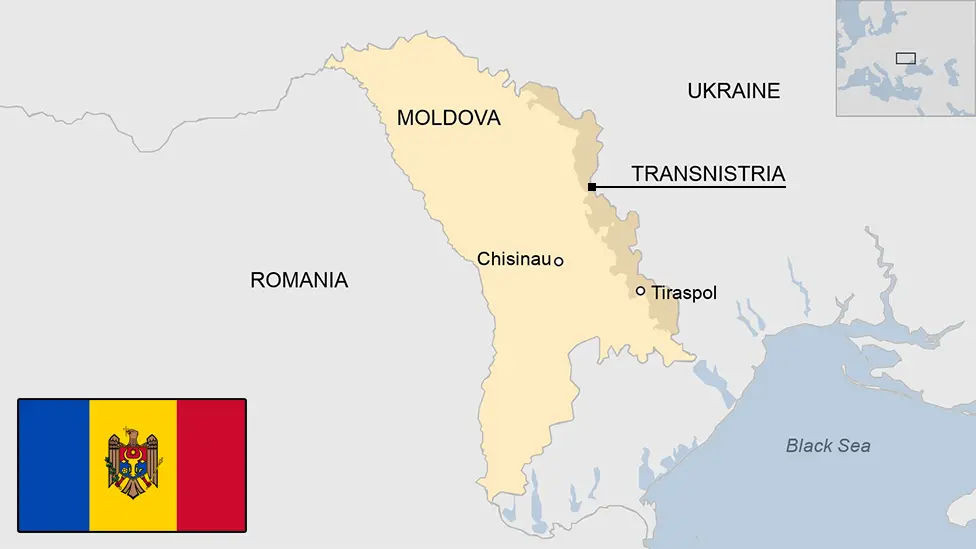
- Moldova is a landlocked country bordering Ukraine and Romania – emerged as an independent republic following the collapse of the Soviet Union in 1991.
- Moldova lies to the east of the great arc of the Carpathian Mountains.
About the UNSC
- The United Nations Security Council (UNSC) is one of the principal organs of the United Nations, responsible for maintaining international peace and security.
- It was established in 1945 as part of the UN Charter and is composed of 15 member states, including five permanent members with veto power—China, France, Russia, the United Kingdom, and the United States—and ten non-permanent members elected for two-year terms by the General Assembly.
- It is headquartered in New York City.
Need for the Reforms in the UNSC
- Current Composition: The current composition of the Security Council has under-representation and un-representation of key regions.
- Inability to Address Conflicts: The current composition of the council has an inability to address critical conflicts and maintain international peace and security.
- Changes in World Order: The world has undergone significant changes since 1945 and the new realities need to be reflected in the permanent membership.
- Veto Power: Currently, only the five permanent members hold veto powers and through its use have stalled action in the Council to address global challenges and conflicts such as in Ukraine and Gaza.
- The remaining 10 nations in the Council are elected to sit as non-permanent members for two-year terms and do not have veto powers.
- Legitimacy: The disproportionate power held by the five permanent members, particularly their veto power lead to a perception of unfairness and lack of legitimacy.
Factors Strengthening India’s Bid for a Permanent Seat
- Global Population and Representation: India is the world’s most populous country, representing approximately 18% of the world’s population.
- Such demographic significance warrants proportional representation in global decision-making bodies like the UNSC.
- Economic Powerhouse: India has emerged as a major global economic force, ranking among the top economies by GDP (nominal) and GDP (PPP).
- Its economic strength contributes significantly to global stability and development, which aligns with the UNSC’s mandate to maintain international peace and security.
- Commitment to Peacekeeping: India has been one of the largest contributors to UN peacekeeping missions, demonstrating its commitment to global peace and security.
- Strategic Importance: India occupies a pivotal geopolitical position in South Asia and the broader Indo-Pacific region.
- Its influence extends beyond regional boundaries, making it crucial in addressing global security challenges such as terrorism, climate change, and maritime security.
- Democratic Values: As the world’s largest democracy, India upholds principles of pluralism, tolerance, and inclusivity, which are fundamental to the UN’s ethos.
- Support from Member States: India enjoys broad support from a significant number of UN member states, this backing reflects recognition of India’s global role and its potential contributions to enhancing the UNSC’s capacity.
Limitations in Introducing the Reforms in UNSC
- Veto Power of Permanent Members: Any reforms to the composition or working methods of the UNSC require the approval of the five permanent members.
- These countries have divergent interests and are reluctant to support changes that could diminish their influence within the Council.
- Regional Dynamics: Regional rivalries and geopolitical tensions complicate efforts to reform the Council.
- Complexity of the Reform Process: Amending the UN Charter to enact reforms requires a lengthy and complex process involving ratification by a significant number of member states, making it difficult to enact substantive reforms.
- Chinese Opposition: China being a permanent member blocks the growth of India becoming a Permanent Member.
Way Ahead
- It is important that both the permanent and non-permanent membership be representative of the world as it is today, not the world as it existed in the wake of the Second World War.
- Reforms in the UNSC are essential for maintaining its relevance, legitimacy, and effectiveness in addressing the complex security challenges facing the international community in the 21st century.
- However, achieving consensus on such reforms among the UN’s member states remains a challenging and ongoing process.
Source: IE
Previous article
Defections Affect Moral Sanctity of Democracy
